Wednesday, July 12, 2006

This Old Heathkit


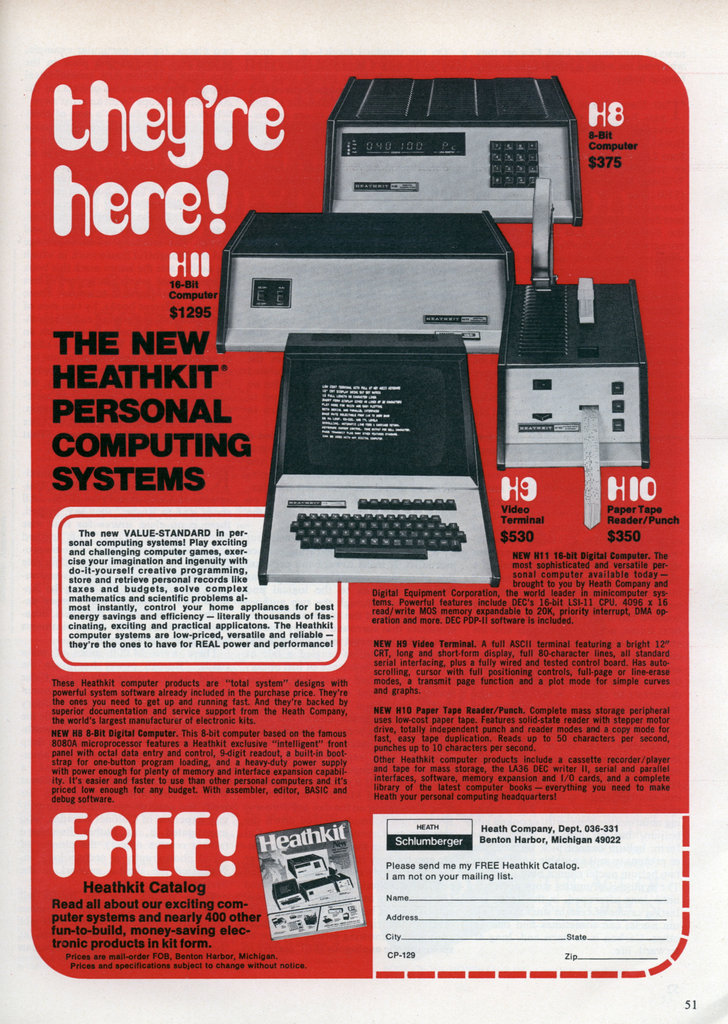
I have a vague memory of The Heathkit H8 computer. To supplement its bread-and-butter amateur radio business, the Heathkit company made quite a stab at staying relevant as the years went by, offering early computers, robots and other things you could build at home and save a few bucks on while learning the art and science of electronics. This fascinating ad and way, way more are available to see at Modern Mechanix. Go to Communications or Computers first.

I remember the Heathkit catalogs from the '80s -- I think the company pretty much faded out by the early '90s. You could build kit versions of ham transceivers and accessories, to be sure, but I think they also had kit TV sets, stereo equipment, even small radios for those who didn't have a mint to drop on something that might not work once you got done with all that soldering. I think Heath had a diagnostic service -- you could send the finished kit back to them if it didn't work, and they would help you out. But part of the kit and its instructions were troubleshooting instructions, and I also remember that for ham radios, you needed a VTVM -- a vacuum tube volt meter -- which itself went for about $100 in the '80s in order to properly align the circuits.

I bet there's quite a market for Heathkits, assembled and the rare unassembled ones, on eBay. I wish I saved some of those old catalogs, that's for sure.

Not to get off track, but this gets me to thinking about old Radio Shack catalogs, which I remember getting every year from one of the local stores -- we had one in the now-mowed-over Laurel Plaza shopping mall in North Hollywood (where I built about three "Perf Box" shortwave radios, cost $7.98 each, with coils wound around AA batteries -- and none of which ever worked) . I always wanted one of these DX-160 shorwave receivers. This is the kind of thing that fuels eBay -- buying the stuff we could never get as kids but which now is cheap, even if it doesn't work all that well.

Thursday, July 06, 2006

System 7 Today

For those running Macs of a certain vintage, especially the PowerPC era, the way to get the most out of your computer is to run System 7, primarily System 7.6.1. How do I know this? I learned everything from Dan Palka of System 7 Today. Dan makes a very good case as to why you should run 7.6.1, even if you have enough memory to go to System 8, and even if you think you're happy with 7.5.3, or something even earlier. Dan is also active on the e-mail lists at Low End Mac, my other beacon of old and moldy Macintosh knowledge, especially the Powerbook list.

More on Low End Mac later. On System 7 Today, besides a lot of knowledge, Dan provides plenty of free utilities and software to make your old Mac as productive as it can be. It was through him that I procured the one program that turned out to be the saving grace of This Old Mac: Internet Explorer 5. Don't laugh. In my opinion, it is the best browser for 7.6.1. I'd like to say iCab is better, but while many Web sites look better in iCab, it just isn't as stable as IE5.

And don't get me started on e-mail programs. After much testing on my part (and some of this is due to my ISP, no doubt), the only way I can get e-mail through a POP account is with Netscape 4.7, which though supposedly "tuned" to the PowerPC chip is very slow. But it does work, and it allows offline reading of mail and Usenet news. Now my "lifestyle," or should I say computing style makes it better for me to read mail via the Web, so I'm sticking with Yahoo! and IE5 as the best solution for the moment. For those who can run OS 9, I do recommend Netscape 7, but that is pretty much a pipe dream for Mac OS 7.

Anyway, Dan is a very good guy to know, and what's amazing is that he's in his early 20s. Now it's not unusual for somebody that young to have a lot of computer knowledge. But about systems and software that is 10 years old?

Tuesday, June 27, 2006

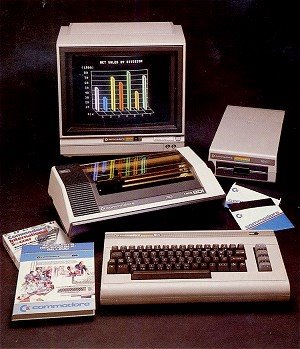
This Old Commodore


The L.A. Times did a story on devotees of the old Commodore 64 and VIC-20 computers pegged to a user group in Fresno. That's even farther back than This Old Mac:

In an era when a home computer's power is measured in gigabytes, (Robert) Bernardo still counts kilobytes as a devoted Commodore user 12 years after the last machine was assembled.

Once the largest personal computer maker in America, the company behind the VIC-20 and the Commodore 64 introduced millions of people like Bernardo to the digital age. The company went out of business in 1994, but its legacy survives in dozens of Commodore clubs around the country.

Bernardo presides over the Fresno chapter.

Never mind that the VIC-20 has so little usable memory — just 3.5 kilobytes — that it can store only a couple of pages of text in its buffers. Or that Commodore hardware was notoriously clunky and buggy. Bernardo still manages all his e-mail on a 1980s-vintage Commodore 64.

"I've never considered the Commodore obsolete," Bernardo said. "I can still do many things with it — e-mail, browse the Web, word processing, desktop publishing and newsletters. I still do games on it: new games that are copyright 2006, ordered from Germany."

Web browsing on a Commodore 64? If that's possible, anything is. Here's one way to do it on the C64 and lots of other 8-bit hardware, including the Apple ][, VIC-20 and even Game Boy. Here's another place to start for those who want to resurrect and/or trick out a C64.

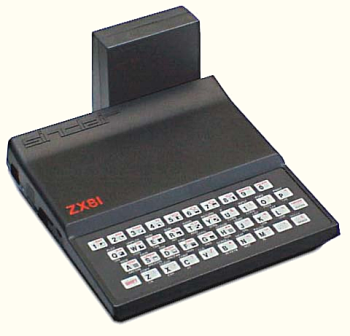
It makes This Old Mac seems so ... newfangled. And there must be millions of C64s lying around in closets, garages and who knows where. It reminds me of my first computer, a Sinclair ZX81, which actually sold for something like $99 back when "real" computers were still going for $1,000-plus. True to its name, the ZX81 came on the market -- in both preassembled and kit forms-- in 1981. The whole Sinclair computer phenomenon was huge in England, but it did have some impact here, too. Start here for some Sinclair history. I kept my Sinclair stuff -- including the crudely printed magazine I subscribed to that featured programs you would type in line by tedious line. At some point, I sold the whole lot at a garage sale for about $10. As you can see, they're still big in Germany, and you can still buy one and build it yourself for $99.

Tuesday, June 13, 2006

This Old Mac

This Old Mac is a Powerbook 1400cs/117 mHz, originally with 16 MB RAM and a 750 MB hard drive. Ilene has had it for about 10 years now, and I first had the notion a couple of months ago of updating it and seeing if I can use it as a working laptop. I've learned a lot from the Web, and I will share that knowledge here in the near future.